

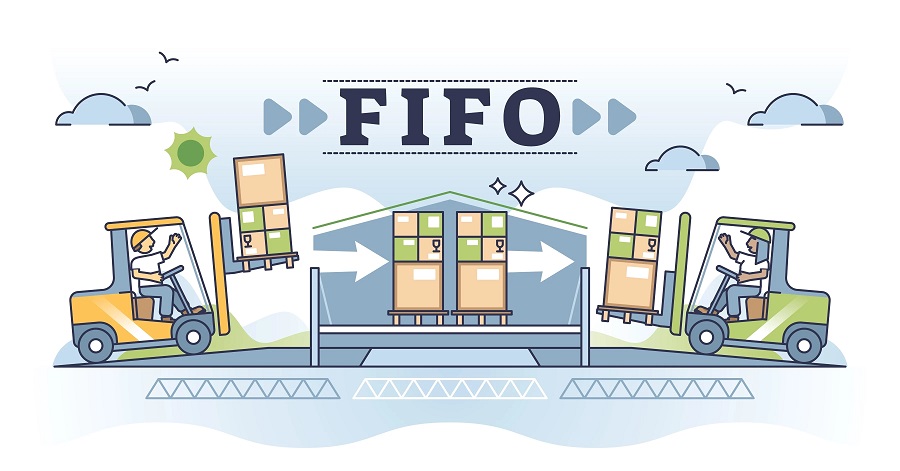
In ecommerce, FIFO (First-In, First-Out) is often treated as a basic warehouse rule: sell older stock first, move newer stock later. On the surface, it sounds like a simple operational practice. But in reality, FIFO is far more than a warehouse discipline—it’s a strategic lever that directly impacts profitability, cash flow, and customer experience.
The problem is that most businesses implement FIFO mechanically rather than strategically. They apply it uniformly across all products, channels, and fulfillment scenarios without questioning whether it actually supports their business goals. As a result, they may reduce waste—but still lose margin, misallocate inventory, or slow down fulfillment decisions.
To unlock its full value, FIFO needs to be treated not as a rule, but as a decision framework that works in sync with how orders are managed and fulfilled.
Understanding FIFO Beyond the Basics
At its core, FIFO means that the oldest inventory is sold or used first, ensuring that stock does not sit too long or become obsolete. This approach is widely used in ecommerce because it reduces the risk of expired or outdated products while maintaining consistent inventory turnover.
But what’s often overlooked is that FIFO operates at two levels:
-
Physical flow: how products move within the warehouse
-
Financial flow: how inventory costs are calculated and reported
Most businesses focus only on the physical aspect—ensuring that older stock is picked first. However, the real impact of FIFO comes from how it influences decision-making across the fulfillment process.
The Strategic Problem: FIFO Without Context
FIFO works well in theory, but ecommerce environments are rarely straightforward. Inventory is distributed across multiple warehouses, orders come from different channels, and demand patterns shift constantly.
When FIFO is applied rigidly without considering these variables, it creates unintended consequences:
-
Orders may be fulfilled from a distant warehouse just to maintain FIFO, increasing shipping costs
-
High-demand products may be delayed because older stock is located in less optimal locations
-
Inventory may be rotated correctly within a warehouse but still misaligned across the network
In other words, FIFO can optimize inventory rotation while hurting fulfillment efficiency.
This is where most businesses go wrong—they treat FIFO as an isolated warehouse rule rather than integrating it into broader operational decisions.
Why Order Decisions Matter More Than Inventory Rules
The effectiveness of FIFO ultimately depends on how orders are processed. Every order represents a decision: which warehouse should fulfill it, which stock should be used, and how quickly it should be shipped.
Without intelligent coordination, FIFO becomes difficult to execute at scale. For example:
-
An order may be routed to a warehouse with newer stock, leaving older inventory untouched elsewhere
-
Multiple channels may compete for the same inventory without prioritization
-
Returns may reintroduce older stock into the system in unpredictable ways
This is why ecommerce order management systems play a critical role in making FIFO actionable. Instead of relying on static rules, these systems evaluate real-time data—inventory age, location, demand patterns—and ensure that orders are aligned with both FIFO principles and operational efficiency.
When order management is integrated with inventory logic, FIFO becomes dynamic rather than rigid. Orders are not just fulfilled—they are optimized based on both stock rotation and business priorities.
The Cash Flow Impact of FIFO Decisions
One of the most overlooked aspects of FIFO is its impact on cash flow. Inventory represents tied-up capital, and how quickly it moves determines how efficiently that capital is used.
When FIFO is implemented effectively:
-
Older inventory is converted into revenue faster
-
Dead stock and write-offs are minimized
-
Storage costs are reduced
-
Working capital is freed up for reinvestment
However, when FIFO is poorly aligned with order decisions, these benefits are lost. Inventory may still move, but not in the most financially efficient way.
For example, if older stock is located in a warehouse that is rarely used for fulfillment, it may remain unsold despite FIFO rules being applied locally. This creates a situation where inventory appears healthy on paper but is inefficient in practice.
The Hidden Complexity of Multi-Warehouse FIFO
FIFO becomes significantly more complex in distributed fulfillment networks. When inventory is spread across multiple locations, maintaining a strict “first-in, first-out” sequence is no longer straightforward.
Each warehouse may follow FIFO internally, but across the network, inventory age becomes fragmented. Older stock in one location may be ignored while newer stock in another is sold first.
To address this, businesses need a centralized inventory management system that provides visibility into stock age, location, and movement across the entire network. Such systems ensure that FIFO is applied not just within warehouses, but across the broader fulfillment ecosystem.
With centralized visibility, businesses can:
-
Identify aging inventory across locations
-
Rebalance stock before it becomes obsolete
-
Align order routing with inventory age and demand
-
Prevent localized overstocking or stockouts
When FIFO Should Be Flexible—Not Rigid
One of the biggest misconceptions about FIFO is that it must always be followed strictly. In reality, there are situations where flexibility is more beneficial:
-
High-margin products: Faster delivery may matter more than strict stock rotation
-
Geographic optimization: Shipping from the nearest warehouse may outweigh FIFO sequencing
-
Promotional campaigns: Clearing specific inventory batches may take priority
-
Returns management: Reintegrating returned stock may require exceptions to FIFO logic
The goal is not to abandon FIFO, but to apply it intelligently. Businesses must balance stock rotation with other priorities such as cost, speed, and customer experience.
Turning FIFO Into a Competitive Advantage
When FIFO is integrated with order management and inventory systems, it becomes more than an operational practice—it becomes a competitive advantage.
Businesses can:
-
Reduce waste without increasing shipping costs
-
Improve delivery speed while maintaining inventory health
-
Optimize working capital through faster stock turnover
-
Align fulfillment decisions with both operational and financial goals
This requires a shift from thinking of FIFO as a warehouse rule to viewing it as part of a broader decision-making framework.
Conclusion
FIFO is often seen as one of the simplest principles in ecommerce operations. But simplicity can be misleading. When applied without context, FIFO can create inefficiencies that limit growth and profitability.
The real value of FIFO lies in how it is integrated with order processing and inventory visibility. By combining intelligent ecommerce order management with a centralized inventory management system, businesses can move beyond rigid rules and create a fulfillment strategy that is both efficient and adaptable.
In a landscape where margins are tight and customer expectations are high, the difference between using FIFO as a rule and using it as a strategy can define long-term success.