

Introduction
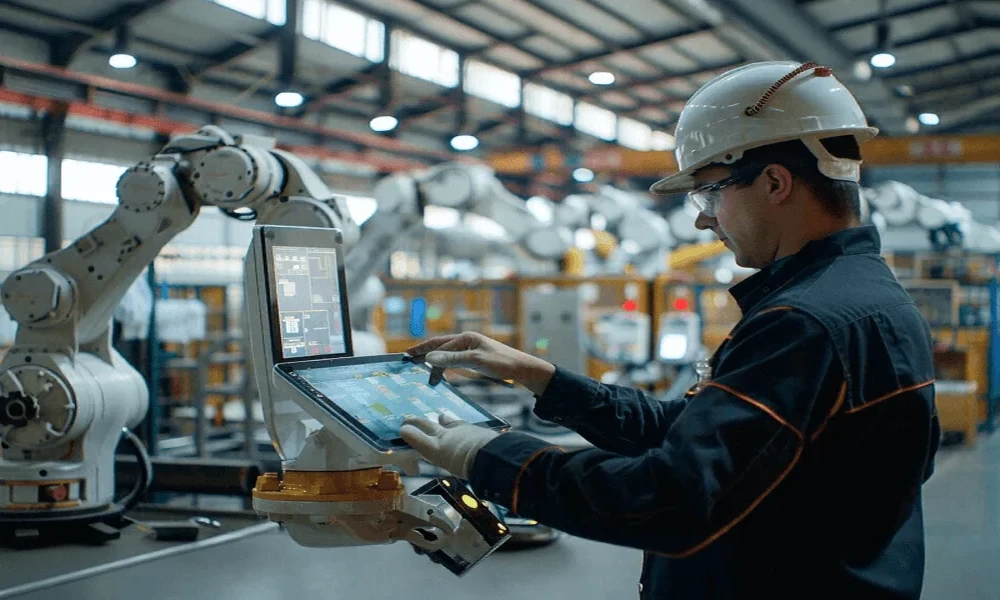
The manufacturing industry is experiencing a major transformation driven by Industry 4.0, automation, and intelligent hardware technologies. Modern factories are becoming more connected, efficient, and productive by integrating robotics, Industrial Internet of Things (IIoT), artificial intelligence, and advanced motion control systems. At the heart of this evolution are reliable motor technologies that ensure machines operate with precision, speed, and energy efficiency.
Whether it’s a robotic assembly line, an automated conveyor, or a CNC machine, high-performance industrial motor drive systems play a critical role in optimizing operations. These systems help manufacturers reduce downtime, improve productivity, and maintain consistent product quality while lowering operational costs.
The Rise of Smart Manufacturing
Smart manufacturing combines digital technologies with industrial production processes to create intelligent factories. Unlike traditional manufacturing environments, smart factories use connected devices, sensors, cloud computing, and automation software to monitor and optimize every stage of production.
Key features of smart manufacturing include:
- Real-time equipment monitoring
- Predictive maintenance
- Automated quality inspection
- Data-driven decision making
- Improved energy efficiency
- Reduced production waste
Manufacturers adopting these technologies gain better visibility into operations while improving overall equipment effectiveness (OEE).
Industrial Automation: The Backbone of Modern Production
Industrial automation refers to the use of control systems, robotics, programmable logic controllers (PLCs), and automated machinery to perform manufacturing tasks with minimal human intervention.
Automation offers several benefits:
- Increased production speed
- Improved workplace safety
- Higher manufacturing accuracy
- Reduced labor costs
- Consistent product quality
- Lower maintenance expenses
Industries including automotive, electronics, pharmaceuticals, food processing, packaging, and logistics increasingly rely on automated production systems to stay competitive.
The Importance of Industrial Motor Drive Systems
Electric motors are responsible for powering nearly every moving component in an industrial facility. However, motors alone cannot deliver optimal performance without advanced drive technology.
Modern industrial motor drive systems regulate motor speed, torque, acceleration, and energy consumption based on application requirements. This precise control improves machine efficiency while reducing mechanical stress and electricity usage.
Industrial motor drive systems are commonly used in:
- Conveyor systems
- Robotic arms
- CNC machines
- Packaging equipment
- Pumps
- Fans
- Compressors
- Material handling equipment
- Automated storage systems
By optimizing motor performance, manufacturers can significantly increase equipment lifespan and reduce maintenance costs.
Robotics and Precision Motion Control
Industrial robots have become essential for modern manufacturing. From welding and assembly to packaging and inspection, robots perform repetitive tasks with exceptional speed and accuracy.
Effective robotic performance depends heavily on advanced motion control technologies. Accurate positioning, smooth acceleration, and synchronized movement all require sophisticated integrated motor drive control solutions.
Integrated drive technology combines motor control electronics with intelligent software, enabling faster response times, improved synchronization, and simplified system architecture. This integration enhances robotic performance while reducing wiring complexity and installation costs.
Energy Efficiency in Industrial Hardware
Energy consumption represents one of the largest operational expenses for manufacturing facilities. Electric motors account for a significant portion of industrial electricity usage worldwide.
Modern drive technologies help reduce energy consumption through:
- Variable speed operation
- Intelligent load management
- Regenerative braking
- Automatic power optimization
- Reduced idle energy usage
Efficient motor control not only lowers operating costs but also supports sustainability initiatives by reducing carbon emissions.
Industrial IoT and Connected Equipment
Industrial Internet of Things (IIoT) connects machines, sensors, controllers, and software platforms into a unified digital ecosystem.
Connected equipment continuously collects operational data, allowing maintenance teams to detect potential issues before failures occur.
Benefits of IIoT integration include:
- Remote equipment monitoring
- Predictive maintenance
- Real-time diagnostics
- Asset performance tracking
- Improved production planning
- Faster troubleshooting
When combined with intelligent motor control, IIoT creates highly responsive manufacturing systems capable of adapting to changing production demands.
Hardware Innovations Driving Industry 4.0
Hardware technology continues to evolve rapidly as manufacturers demand higher performance and greater reliability.
Recent innovations include:
- Smart sensors
- Edge computing devices
- AI-enabled controllers
- High-efficiency servo motors
- Digital motor drives
- Advanced power electronics
- Wireless industrial communication
These technologies improve production flexibility while enabling manufacturers to process increasing amounts of operational data in real time.
Selecting the Right Motor Platform
Choosing the appropriate motor platform depends on several factors, including application requirements, environmental conditions, energy efficiency goals, and maintenance expectations.
Engineers typically evaluate:
- Required torque
- Operating speed
- Load characteristics
- Duty cycle
- Environmental protection
- Communication compatibility
- Safety standards
- Scalability
Modern Volcano Electric motor platforms are designed to support demanding industrial environments with reliable performance, advanced motion control capabilities, and compatibility with automated manufacturing systems. Selecting a well-designed motor platform helps improve long-term productivity while minimizing operational disruptions.
Future Trends in Industrial Automation
The future of manufacturing will continue to be shaped by emerging technologies, including:
- Artificial intelligence
- Machine learning
- Digital twins
- Autonomous mobile robots
- Collaborative robots (cobots)
- Edge AI
- 5G industrial connectivity
- Advanced predictive analytics
As these innovations mature, factories will become increasingly autonomous, adaptive, and data-driven.
Motor drive technologies will remain central to this evolution, enabling machines to operate with greater precision, efficiency, and intelligence.
Conclusion
Industrial automation and smart manufacturing are transforming production across every major industry. From robotics and motion control to IIoT and intelligent hardware, modern manufacturing depends on advanced technologies that improve efficiency, quality, and reliability.
Reliable industrial motor drive systems provide the precise control needed to power automated equipment, while integrated motor drive control enhances machine performance through intelligent operation and seamless communication. Combined with innovative Volcano Electric motor platforms, these technologies enable manufacturers to build smarter, more energy-efficient factories prepared for the demands of Industry 4.0.
Businesses investing in advanced automation hardware today are positioning themselves for greater productivity, reduced operating costs, and long-term success in an increasingly competitive global manufacturing landscape.